
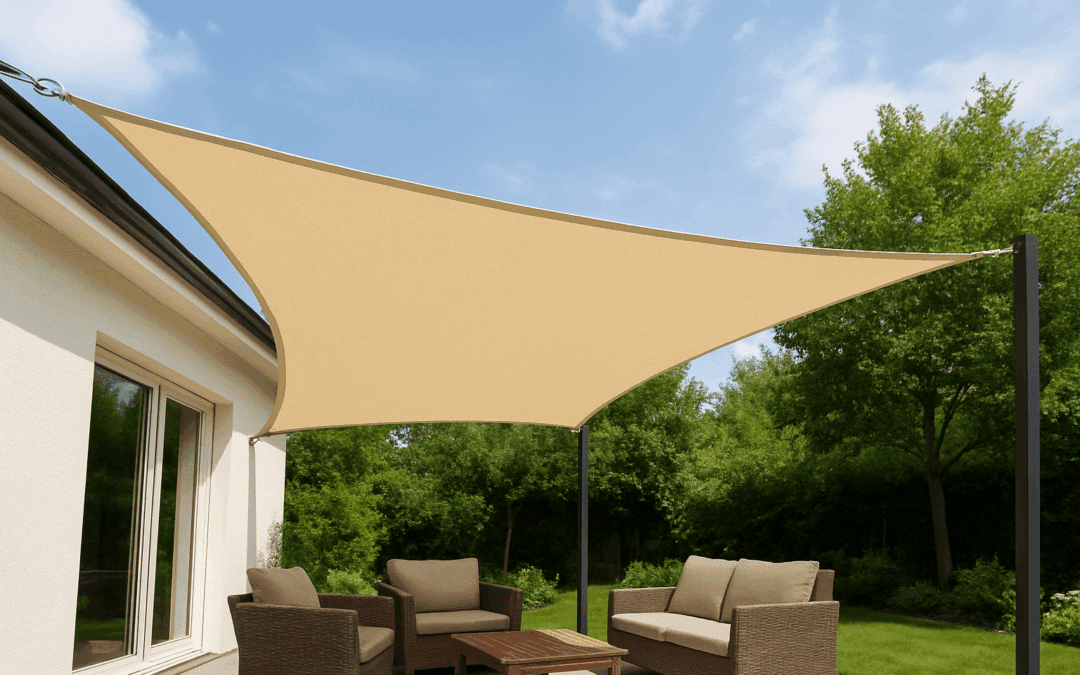
If you’re thinking about adding a shade sail to your outdoor space, choosing the right fabric is one of the most important decisions you’ll make. The right material doesn’t just keep you dry when it rains — it also affects durability, comfort, style, and how much maintenance your sail will need.
In this guide, we’ll walk you through the most common types of waterproof shade sail fabrics, what makes them unique, and where they work best. By the end, you’ll know exactly which fabric suits your space and lifestyle.
What Makes a Fabric Waterproof?
Not all shade sails are built the same. A “waterproof” fabric is specially designed to stop rain from seeping through, usually with the help of coatings such as polyurethane (PU) or polyvinyl chloride (PVC).
These coatings form a protective barrier while the fabric’s tight weave adds strength. Some materials even allow moisture vapour to escape — meaning you stay dry without turning your shaded area into a hot, stuffy tent.
The Main Types of Waterproof Shade Sail Fabrics
1. Polyurethane (PU) Coated Fabrics
PU-coated fabrics are a popular choice because they strike a great balance between comfort and performance. They’re lightweight, flexible, and block rain effectively — but they’re also breathable enough to reduce heat buildup underneath.
Why people love them:
- 100% waterproof barrier
- Strong and tear-resistant
- Comfortable with some breathability
- Versatile for sails, cushions, and covers
2. Vinyl (PVC) Fabrics
PVC fabrics are the heavy-duty option. They’re extremely tough, waterproof, and low-maintenance. If you live in a place with lots of rain or unpredictable weather, these are hard to beat. The only downside? They can get a little warm in direct sun.
Why people love them:
- Completely waterproof
- Resistant to UV damage and mildew
- Super easy to clean
- Perfect for commercial or high-traffic spaces
3. Canvas with Waterproof Coating
Canvas gives a more traditional, natural look compared to synthetics. When treated with a waterproof coating, it becomes a strong option for shade sails, though it tends to be heavier and less breathable than modern fabrics.
Why people love them:
- Classic, natural aesthetic
- Good water resistance when treated
- Strong and long-lasting
- Great for homes with a rustic or timeless style
4. Polyester Shade Sail Fabrics
Polyester is widely used thanks to its strength, UV resistance, and ability to hold colour beautifully. Add a waterproof coating, and it becomes a lightweight, vibrant, and reliable choice for long-term outdoor use.
Why people love them:
- Lightweight but strong
- Keeps its colour over time
- Waterproof when coated or laminated
- Breathable options available
Understanding Fabric Ratings
When comparing fabrics, you’ll often see two key ratings:
- Waterproof Rating (Hydrostatic Head): Tells you how much water pressure a fabric can handle before leaking. Anything above 1,000 mm is considered waterproof for outdoor use.
- Breathability: Shows how much moisture vapour can pass through. This helps keep the shaded area cooler and reduces condensation.
The trick is finding the right balance: maximum waterproofing without making your outdoor space feel like a sauna.
Other Features to Look Out For
- UV Protection: Stops harmful rays and helps your sail last longer.
- Durability: Especially important in windy or harsh climates.
- Colours & Style: Shade sails come in a wide range of finishes to match your outdoor area.
- Easy Maintenance: Synthetic coated fabrics (like PU and PVC) are usually the easiest to clean.
Where Can Waterproof Shade Sail Fabrics Be Used?
These fabrics aren’t just for sails. They’re versatile and work in all sorts of outdoor settings:
- Patios & Gardens: Shelter your outdoor living areas from sun and rain.
- Cushions & Upholstery: Protects outdoor furniture from moisture and dirt.
- Protective Covers: Great for boats, vehicles, or equipment.
- Commercial Spaces: Restaurants, cafes, and parks use them to create comfortable customer areas.
Choosing the Right Fabric for You
Before deciding, think about:
- Your local weather conditions (rain, wind, UV exposure)
- Whether you want more breathability or maximum waterproofing
- How heavy or light you want the fabric
- Your preferred colours and overall style
- Budget and maintenance needs
Caring for Your Shade Sail Fabric
A little maintenance goes a long way. Wash your sail regularly with mild soap and water, avoid harsh chemicals, and check it for any wear or damage. Keeping it clean and well-maintained will help extend its life and performance.
The Future of Waterproof Fabrics
Fabric technology is constantly improving. Modern options now include breathable membranes, antimicrobial coatings, and advanced UV protection — all designed to make your outdoor space cooler, cleaner, and more comfortable.
Final Thoughts
The right fabric can make or break your shade sail. Whether you want the heavy-duty performance of PVC, the balanced comfort of PU, the natural charm of canvas, or the lightweight strength of polyester — there’s an option that’s perfect for your space.
Ready to upgrade your outdoors? Explore our range of high-quality waterproof shade sail fabrics and find the one that fits your style and needs.