
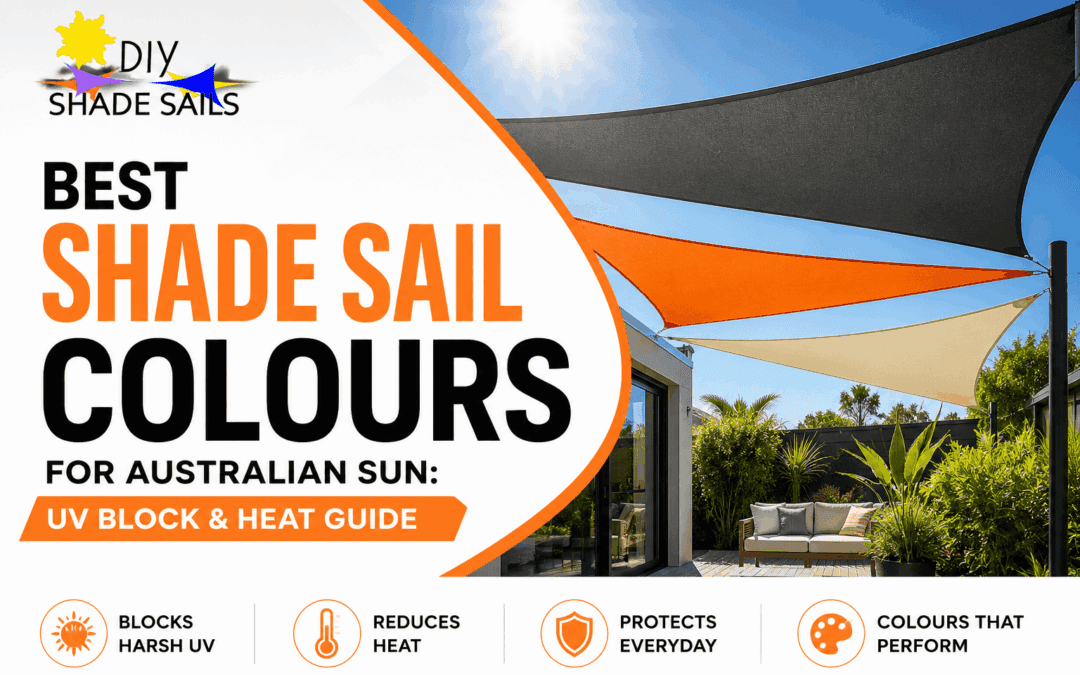
Australia has some of the harshest UV conditions in the world, which makes choosing the best shade sail colour Australia has to offer more important than most homeowners realise. It’s tempting to assume the coolest-looking colour will also be the coolest-feeling one — but that’s not quite how it works.
Colour affects four different things: UV protection, heat, glare, and overall outdoor comfort. Mixing these up is the easiest way to end up disappointed with a new shade sail. So before settling on a colour for your home, it helps to know what each colour is actually doing for you, and what it isn’t.
If maximum UV protection is your priority, charcoal and dark-coloured shade sails generally perform best. If you want a brighter, more open-looking space, light grey or sandstone tend to be better options. Either way, shade sail colour heat performance depends just as much on airflow and fabric quality as it does on the shade itself.
This guide breaks it down in plain English, using guidance from Cancer Council SunSmart and ARPANSA alongside three decades of manufacturing experience, so you can pick a colour that suits your space, your climate, and how you actually use your backyard.
What Is The Best Shade Sail Colour In Australia?
It’s easy to treat colour as a purely aesthetic choice — something picked to match the house or fence. Colour also serves a practical purpose, and understanding its role can help prevent a gap between your expectations and the final result. There’s no single best shade sail colour Australia-wide; the right choice depends on your priorities, your location, and how exposed your outdoor area is.
Colour Influences UV Protection
Every shade sail colour absorbs and reflects sunlight differently. Darker colours tend to absorb more light, which generally means they block more UV radiation. Lighter colours reflect more light, which can mean slightly lower UV blocking, depending on the fabric.
But colour is only half the story. UV protection also depends heavily on fabric quality — how tightly woven it is, what it’s made from, and how it’s manufactured. A premium light-coloured fabric can still outperform a poor-quality dark one, as covered in the UPF rating shade sail section below.
Colour Influences Heat and Comfort
This is where most confusion happens. There’s a difference between:
- Feeling cooler — the comfort you get from shade, airflow, and reduced glare
- Actual fabric temperature — how warm the material itself gets in direct sun
- Brightness under the sail — how much visible light filters through
A dark shade sail might run a little warmer to the touch, but the area underneath can still feel pleasant because less sunlight and glare get through. Shade sail colour heat performance and UV protection are connected, but not in the way most people assume — covered properly in the next section.
Do Darker Shade Sails Block More UV?
Yes. As a general rule, darker shade sails block more UV than lighter ones, because they absorb more sunlight rather than reflecting it.
Common darker colours used for maximum UV blocking include:
- Black
- Charcoal
- Navy
- Dark Green
This is the heart of the dark vs light shade sail UV protection debate. Darker tones consistently rank higher for UV absorption, which is why they’re popular for driveways, carports, and fully exposed areas where sun protection is the top priority.
Here’s how the main colour categories compare:
| Colour Type | UV Protection | Brightness | Visual Comfort |
|---|---|---|---|
| Dark Colours | Excellent | Lower | High Shade |
| Mid-Tones | Very Good | Balanced | Balanced |
| Light Colours | Good | Bright | Open Feel |
Cancer Council SunSmart guidance notes that even well-designed shade only reduces UV exposure — it doesn’t block all of it, since UV can still scatter and reflect off nearby surfaces like concrete, paving, and water. Colour is one part of a bigger picture, alongside fabric quality, sail size, and what’s around your shade sail.
Do Dark Shade Sails Get Hotter Underneath?
No, not necessarily. This is one of the most common shade sail myths, and it’s worth addressing directly.
It’s true the fabric itself may absorb more heat in direct sun, simply because darker materials absorb more energy. But the area underneath a dark shade sail can still feel just as comfortable — sometimes more so — because:
- More direct sunlight is being blocked
- There’s less glare bouncing around under the sail
- Visual comfort is higher, which makes the space feel cooler even at a similar air temperature
In practice, airflow often matters more for shade sail colour heat comfort than colour does. A dark shade sail with good cross ventilation and an open-sided installation will usually feel more comfortable than a light-coloured sail in a stuffy, enclosed corner. If heat build-up worries you, think about ventilation and placement just as much as colour.
A real-world example: a Darra homeowner with a west-facing patio may get more genuine comfort from charcoal or dark grey fabric than white, simply because glare reduction becomes the bigger issue once the afternoon sun hits hard in summer.
Light vs Dark Shade Sails: Which Is Better for Australian Conditions?
There’s no single “best” answer here — it depends on what you’re trying to achieve. This comparison sums up the dark vs light shade sail UV protection and comfort trade-offs:
| Feature | Light Colours | Dark Colours |
|---|---|---|
| UV Blocking | Good | Better |
| Heat Reflection | Better | Lower |
| Brightness | High | Lower |
| Glare Reduction | Moderate | Excellent |
| Pool Areas | Excellent | Good |
| Play Areas | Good | Excellent |
Light colours like white, cream, sandstone, beige, and light grey reflect more sunlight, keeping spaces feeling bright and open. They are ideal for spaces that already receive some natural shade from nearby structures, fencing, or trees, or where a light and open atmosphere is preferred.
Dark colours like charcoal and black absorb more sunlight, giving stronger UV blocking and noticeably better glare reduction. They suit fully exposed areas where sun protection is the main goal.
Neither option is “wrong” — it’s about matching the colour to the job the shade sail needs to do.
Quick-Reference: Colour By Goal
| Goal | Recommended Colour |
|---|---|
| Maximum UV Protection | Charcoal, Black |
| Bright Appearance | Light Grey, Beige |
| Pool Areas | Sandstone, Light Grey |
| Driveways | Charcoal, Navy |
| Balanced Performance | Mid Grey |
Best Shade Sail Colours for Different Outdoor Areas
Different parts of your property call for different colours. Here’s how to think about it room by room, or area by area.
Pool Areas
When it comes to shade sail colour for pool area projects, lighter tones tend to win out. Light grey, sandstone, beige, and soft blue tones are popular around pools because they:
- Reduce glare off the water’s surface
- Keep the space feeling open and bright
- Complement reflective water rather than competing with it visually
A pool area is often already a high-glare zone, so a colour that calms that down rather than adding visual heaviness tends to work well. If you’re searching specifically for the best shade sail colour for pool area use, start with light grey or sandstone and adjust from there based on how much direct sun the pool gets.
Outdoor Dining Areas
For alfresco dining and entertaining spaces, charcoal, graphite, and mid grey tones are worth considering. They create a more relaxed evening ambience and reduce daytime glare while you’re eating or entertaining — handy if you’re squinting at a menu on a bright Queensland afternoon.
Kids’ Play Areas
For play areas, the priority shifts slightly. Bright but practical colours work well here — think light grey, beige, or commercial colour combinations suited to an energetic space. UV protection is especially important, since kids tend to spend long stretches outdoors without thinking about sun exposure, so lean toward a fabric with strong UV-blocking performance regardless of which shade you pick.
Driveways and Carports
For driveways and carports, charcoal, dark grey, and navy are common recommendations. These darker tones offer better UV reduction for parked cars and reduce the glare that bounces back up off light-coloured concrete.
Understanding UPF Ratings in Shade Sail Fabrics
What Is UPF?
UPF stands for Ultraviolet Protection Factor. It’s the rating that tells you how much UV radiation a fabric blocks before it reaches you — the key number to check on any UPF rating shade sail fabric. A higher UPF rating means more UV is stopped by the material itself, regardless of colour.
Why UPF Matters More Than Colour Alone
Here’s the key point: a high-quality fabric with strong UV-blocking performance is often more important than colour selection alone. You could choose the “right” dark colour for UV protection, but if the fabric is thin, poorly woven, or low quality, it won’t perform the way you expect. A well-made fabric with a strong UPF rating shade sail buyers can rely on will usually outperform a cheaper fabric in any colour.
What drives UPF performance includes:
- Fabric density — how tightly the material is woven
- Material quality — the type and grade of fibre used
- Manufacturing standards — how consistently and carefully the fabric is produced
Fabric selection deserves just as much attention as colour. For more on how different fabrics perform, our shade sail fabric selection guide covers the differences between shadecloth and waterproof options in more detail.
Does Shade Sail Colour Affect Fabric Lifespan?
Colour can have some influence, but it’s not the main factor. UV exposure does affect how fabrics age over time, and darker colours that absorb more heat and light can wear slightly differently than lighter ones.
That said, material quality and manufacturing quality matter far more than colour for how long a shade sail lasts. Proper tensioning also plays a major role — a sail that isn’t tensioned correctly will flap, stress at the seams, and wear out faster regardless of colour. Quality construction and correct installation generally have a much bigger impact on lifespan than colour choice.
What We’ve Learned From Manufacturing Over 25,000 Shade Sails
After three decades of manufacturing shade sails in Brisbane, a few patterns show up again and again.
Most popular colours. Charcoal, sandstone, and light grey are consistently the most ordered colours across Australia, generally because they balance UV performance with a look that suits most homes.
Common customer mistakes. The most frequent one is choosing a colour purely on looks without thinking about orientation — a beautiful white sail on a north-facing, fully exposed patio often ends up disappointing the owner once summer glare sets in. Another is assuming colour alone determines UV protection and overlooking fabric quality altogether.
What works best in Queensland. For fully exposed Queensland backyards, mid-to-dark neutrals paired with a well-rated UV-blocking fabric tend to deliver the most reliable, all-round performance, especially across hot, high-UV months.
How Brisbane and Darra Conditions Influence Shade Sail Colour Choice
Queensland’s UV index regularly sits at 10 or higher through summer, with temperatures often climbing above 30°C. Brisbane suburbs like Darra deal with strong summer sun, hot outdoor entertaining areas, and plenty of concrete driveways that reflect UV back up at you. These local conditions are worth factoring into your colour decision.
Homeowners across Darra, Oxley, Forest Lake, and the wider Western Brisbane region often face strong afternoon sun and reflective concrete surfaces, which makes glare reduction just as important as raw UV blocking. The same applies further along the Ipswich corridor and across South East Queensland more broadly, where similar heat and UV conditions are common.
For fully exposed locations — a north-facing patio with no tree cover, or a driveway baking in direct sun all afternoon — charcoal, dark grey, or mid-tone neutrals tend to offer the best balance of UV protection and everyday comfort.
For more aesthetic-focused spaces, like a pool area or entertaining zone that already gets some shade from the house, beige, sandstone, or light grey can give a brighter look without compromising too much on protection.
Choosing the Best Shade Sail Colour for Your Home
If you’re still weighing up your options, this simple framework can help narrow things down.
Choose dark colours if:
- Maximum UV protection is your top priority
- The area gets full, direct sun for most of the day
- Glare reduction matters (driveways, outdoor dining, west-facing yards)
Choose light colours if:
- You want a bright, open appearance
- The area already gets partial shade from a building or tree
- You’re shading a pool and want to complement the water
Choose mid-tones if:
- You want a balance of solid UV protection and everyday comfort without going too dark or too light
Final Thoughts
There’s no single shade sail colour that suits every situation, and the best shade sail colour Australia-wide really comes down to your priorities. Dark colours generally offer stronger UV blocking, while light colours create a brighter, more open feel. Fabric quality and UPF rating matter just as much as colour, and it’s worth considering your surrounding surfaces — concrete, paving, water — along with your local climate and how you plan to use the space.
Still unsure which colour is right for your project? Use our online order forms to compare colours, fabrics and sizes before ordering your custom-made shade sail, manufactured in Brisbane and shipped Australia-wide.
Frequently Asked Questions