
If you have ever tried to enjoy a backyard swim at two in the afternoon in summer, you already know the problem. The sun is fierce, the pool deck is too hot to walk on barefoot, and there is nowhere shady to sit while the kids splash around. This is the reality for most Australian homeowners, and it is exactly why so many people start searching for the best shade sail for pool area use.
A good shade sail solves more than one problem at once. It cuts UV exposure, cools down hot paving and decking, and turns an unusable midday backyard into a comfortable space for swimming, relaxing or entertaining. This guide walks through how to choose the right shade sail for a pool, deck or outdoor entertaining area, with practical pool shade solutions and backyard shade ideas based on real Australian conditions.
In this guide, you’ll learn about different shade sail shapes, materials, colour options, installation basics, and how shade sails compare to umbrellas, pergolas, and awnings so you can make an informed decision for your backyard.
Why Shade Sails Are Ideal for Pools, Decks and Outdoor Entertaining Areas
Shade sails have become the go-to shade structures for Australian backyards, and there are good reasons for that. Australia regularly records some of the highest UV Index readings in the world, and SunSmart Australia, run by Cancer Council Australia, lists shade as one of the most effective ways to reduce UV exposure outdoors. A well-made shade sail blocks a large share of that UV before it reaches your skin, your furniture or your pool water.
Beyond UV protection shade sails offer a few other practical benefits for outdoor living:
- Cooler outdoor spaces, since open-weave fabric lets hot air rise and escape rather than trapping it underneath.
- Better comfort for swimming, dining and relaxing, even in the middle of the day.
- More privacy from neighbours and overlooking windows, especially with angled or layered sails.
- A visual upgrade to the backyard, with shapes and colours that suit modern or traditional homes.
- A potential boost to property appeal, since a well-shaded outdoor living space reads as more usable living area.
Because of all this, shade sails are a smart starting point whether you are shading a pool, a deck, or a combined entertaining zone.
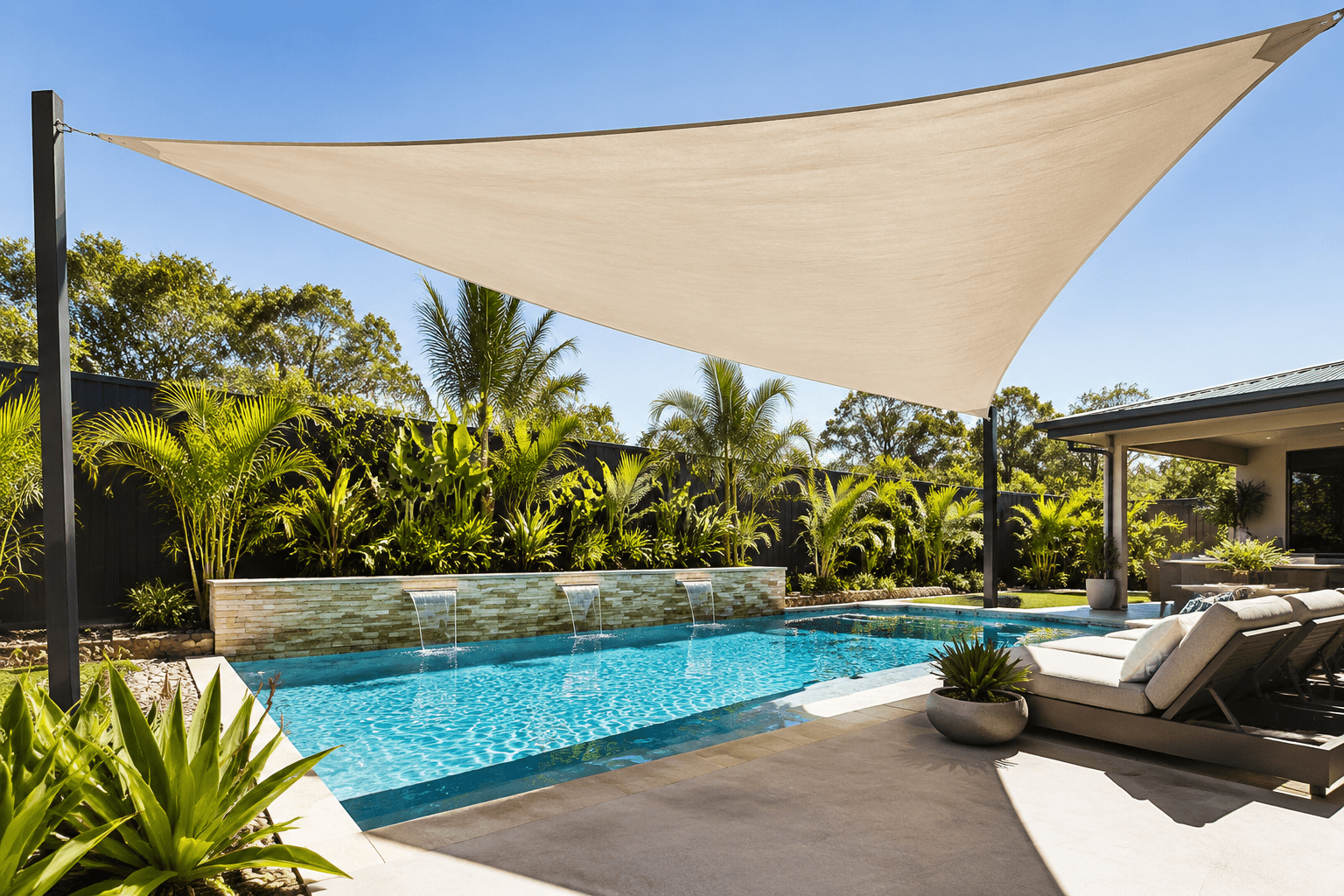
Best Shade Sail for Queensland Conditions
Direct answer: In Queensland, a breathable, high UV-block HDPE shade sail with a properly tensioned, cable-edged perimeter is generally the best fit, since it has to handle intense sun, high humidity and a genuine risk of summer storms all at once.
Brisbane weather and the wider South East Queensland climate create a particular set of demands that generic shade advice often misses. Four factors matter most:
- High UV: Queensland sits closer to the equator than most of Australia’s southern states, which means UV Index readings climb into the extreme range for much of the year, not just over summer.
- Summer storms: The November to April storm season brings sudden, severe wind gusts, so any shade structure needs strong anchor points and properly tensioned fabric to avoid flogging or tearing.
- Humidity: Brisbane’s humid air holds heat underneath solid roofing, which is one reason breathable shade cloth is often preferred over waterproof fabric directly above pools.
- Wind exposure: Open blocks, elevated decks and coastal-adjacent suburbs all face higher wind loads, so hardware and cable tensioning need to be matched to the site, not just the sail itself.
Taken together, this is why a sail designed and built for southern states does not always perform the same way in a Queensland backyard. Local manufacturing experience, like factory-direct production based in Brisbane, gives a practical understanding of exactly these conditions.
What Is the Best Shade Sail for a Pool Area?
Direct answer: For most Australian pool areas, a high quality HDPE shade sail with around 90 to 95 percent UV protection, based on typical Australian shade fabric specifications, gives the best balance of sun protection, airflow and durability. Waterproof sails suit pool areas where you also want protection from rain, but they hold more heat underneath than breathable fabric.
Choosing the best shade sail for a pool area comes down to balancing three things: how much UV protection you need, how much airflow you want over the water, and whether you also want rain coverage. Most pool owners find that a breathable HDPE sail strikes the right balance as a pool shade solution, since it keeps the area noticeably cooler than a solid roof while still cutting glare and UV significantly.
Benefits of a Shade Sail Over a Pool
A shade sail over a pool does a lot more than just block the sun. Specific benefits include:
- UV protection for swimmers, particularly children, which supports general pool safety alongside fencing and supervision.
- Reduced water temperature swings, since direct sun is a major driver of daytime pool heating.
- Less glare off the water surface, which makes it easier to actually see the bottom of the pool, another practical pool safety benefit.
- Less leaf litter and debris blown or dropped into the pool, depending on coverage and positioning.
- Improved privacy from neighbouring properties, especially with sails angled toward sightlines.
Full Pool Coverage vs Partial Pool Coverage
One of the first decisions homeowners face is whether to shade the whole pool or just part of it. Both approaches work well, but they suit different households.
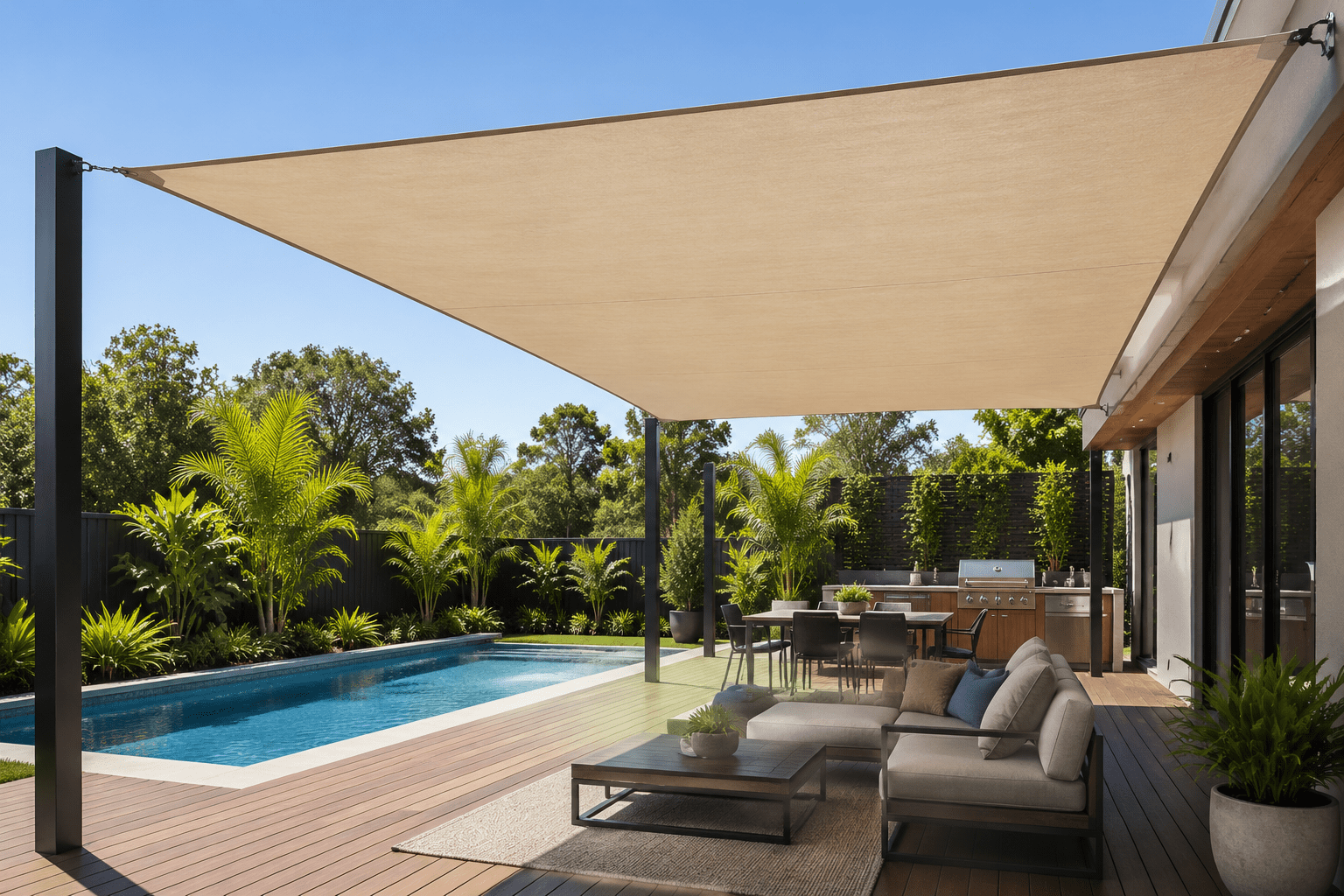
Rectangular sail covering deck
Best Shade Sail Ideas for Deck Areas
When it comes to shade sail ideas for deck spaces, the right shape depends on the deck’s layout, the position of the sun, and where your anchor points can go. Decks often sit closer to the house than pools, which opens up more fixing options along the fascia, posts or pergola beams.
Rectangular Shade Sails
Rectangular sails are the workhorse choice for decks. They cover large, regular-shaped areas efficiently, which makes them ideal for big decks and outdoor dining spaces where you want even shade across the whole zone rather than patchy coverage.
Triangular Shade Sails
Triangular sails suit decks with limited anchor points or awkward angles. Because they only need three fixing points, they work well on smaller decks, narrow side spaces, or anywhere a rectangular or square sail would not fit cleanly.
Layered Shade Sail Designs
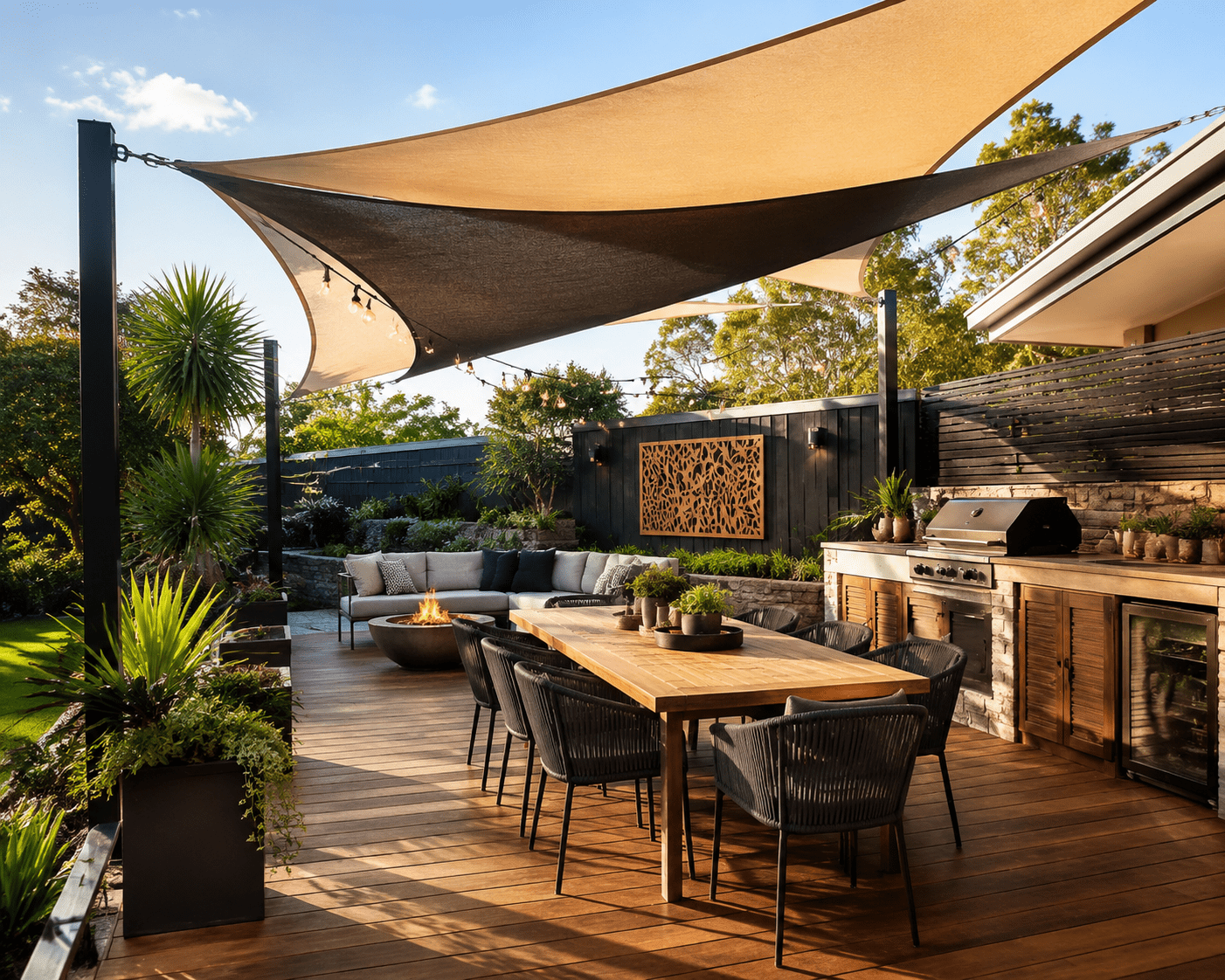
Layered or overlapping sail designs use two or more triangles or smaller shapes set at different heights and angles. This creates a striking, contemporary look while also giving more even shade coverage throughout the day, since the sun moves under one layer or another rather than leaving gaps.https://diyshadesails.net.au/custom-made-shade-sails/
For deck areas with a strong architectural style, layered designs made from custom shade sails are one of the more popular shade sail ideas for deck owners who want both function and visual impact.
Outdoor Entertaining Shade Sail Ideas
An outdoor entertaining shade sail does double duty: it protects guests from harsh sun and makes barbecue areas, alfresco dining and lounge zones comfortable to use for longer stretches of the day. As a patio shade solution, a well-placed sail can extend how often a patio or alfresco area actually gets used across the year.
A few practical placement ideas for entertaining zones include:
- Positioning a sail above the BBQ and outdoor kitchen bench, so the cook is not standing in direct sun.
- Covering the full alfresco dining table, angled to block the harshest afternoon sun from the west.
- Shading lounge areas separately from dining zones if the entertaining area is large enough for two sails.
- Adding a smaller sail over children’s play zones or sandpits, positioned away from swinging or climbing equipment.
Many Australian backyards combine pool and entertaining areas in one continuous space. In these layouts, a larger sail (or two connected sails) can shade both the pool edge and the adjoining dining or lounge area, creating one comfortable outdoor living zone rather than a hot pool deck next to a shaded patio.
Choosing the Right Shape for Your Backyard
Backyard shade sail inspiration, and backyard shade ideas more generally, usually start with shape, since this affects coverage, fixing points and overall look. Here is a quick breakdown of the three most common shapes.
Triangular Shade Sails
Best where anchor points are limited, or where a striking, angular look is wanted. Easy to layer with other sails.
Square Shade Sails
A versatile middle ground, suited to square patios, courtyards and play areas where even coverage matters more than a dramatic shape.
Rectangular Shade Sails
Best for larger, regular spaces such as decks, dining areas and full pool coverage, since they make the most efficient use of fabric per square metre of shade. Homeowners after a simple, budget-friendly option can also look at standard shape shade sails rather than a fully custom design.
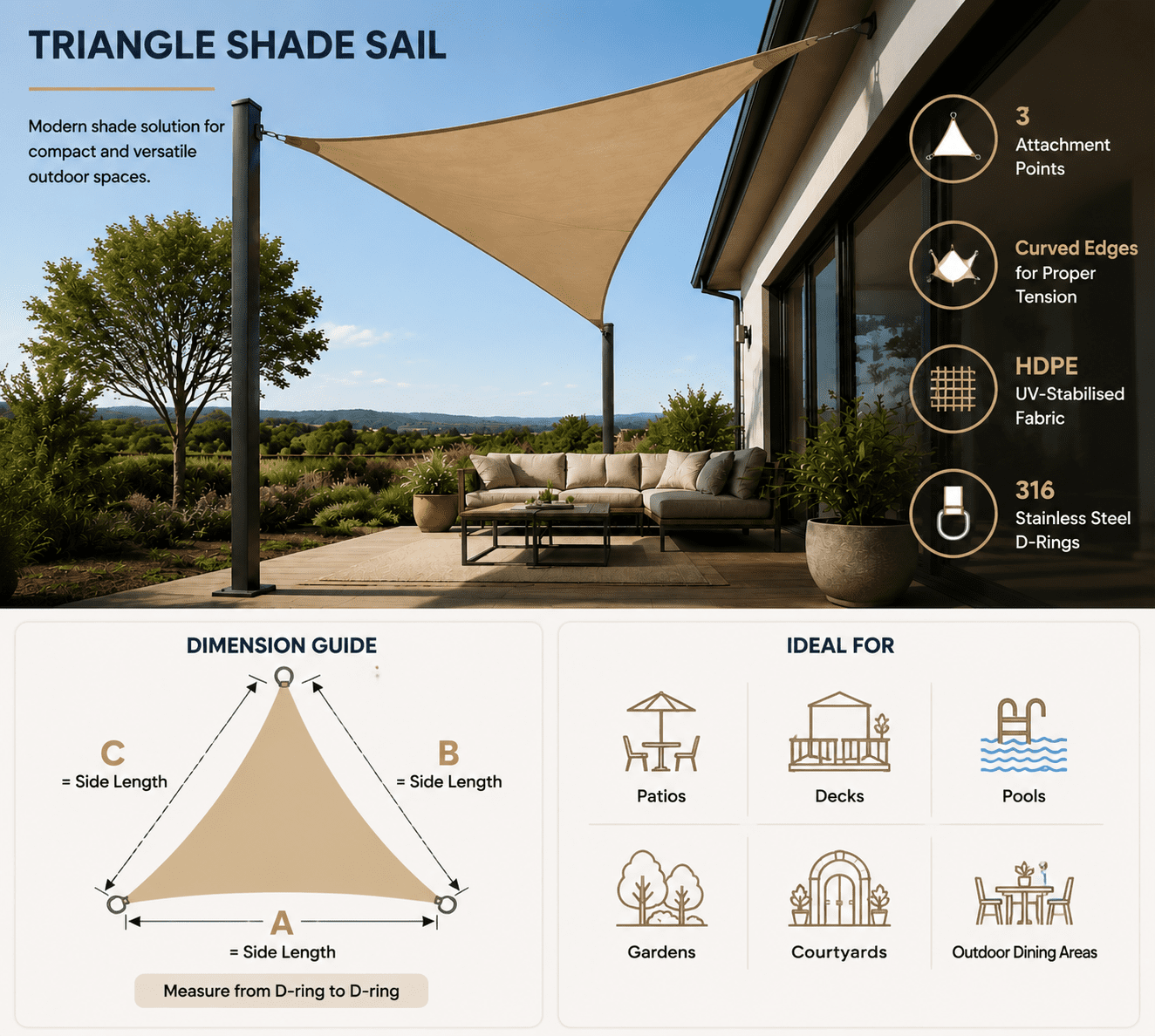
Triangle Shade Sail Dimension Guide
Shade Sail Materials: What Works Best in Queensland?
Material choice matters just as much as shape. In a hot, humid, storm-prone climate like Queensland’s, the difference between a breathable and a waterproof sail can change how comfortable your outdoor space feels.
HDPE Shade Cloth
HDPE (knitted shade cloth) is the most common material for pool and deck sails, and it is the usual recommendation among UV protection shade sails. It is breathable, letting hot air pass through rather than pooling underneath, and typically blocks somewhere in the 90 to 95 percent UV range, based on standard Australian shade fabric specifications for this fabric type. This combination of airflow and strong UV protection is why HDPE remains the standard choice for most pool areas.
Waterproof Shade Sails
Waterproof shade sails Australia-wide use a heavier, laminated fabric that sheds rain as well as blocking sun. They are a good waterproof shade sails option for entertaining areas you want to use regardless of weather. The trade-off is reduced airflow, since a solid waterproof fabric holds more heat underneath than an open-weave cloth, particularly in still, humid conditions.
Why Quality Construction Matters
Material is only half the story. How a sail is constructed has a big impact on how long it lasts and how well it performs in wind and storms. Look for UV-stabilised thread, marine-grade hardware, and a properly engineered tensioning system.
Based on the standard specifications of commercial-grade shade fabrics commonly used in Australia. Always check the specific fabric data sheet for the exact UV rating of the material you choose.
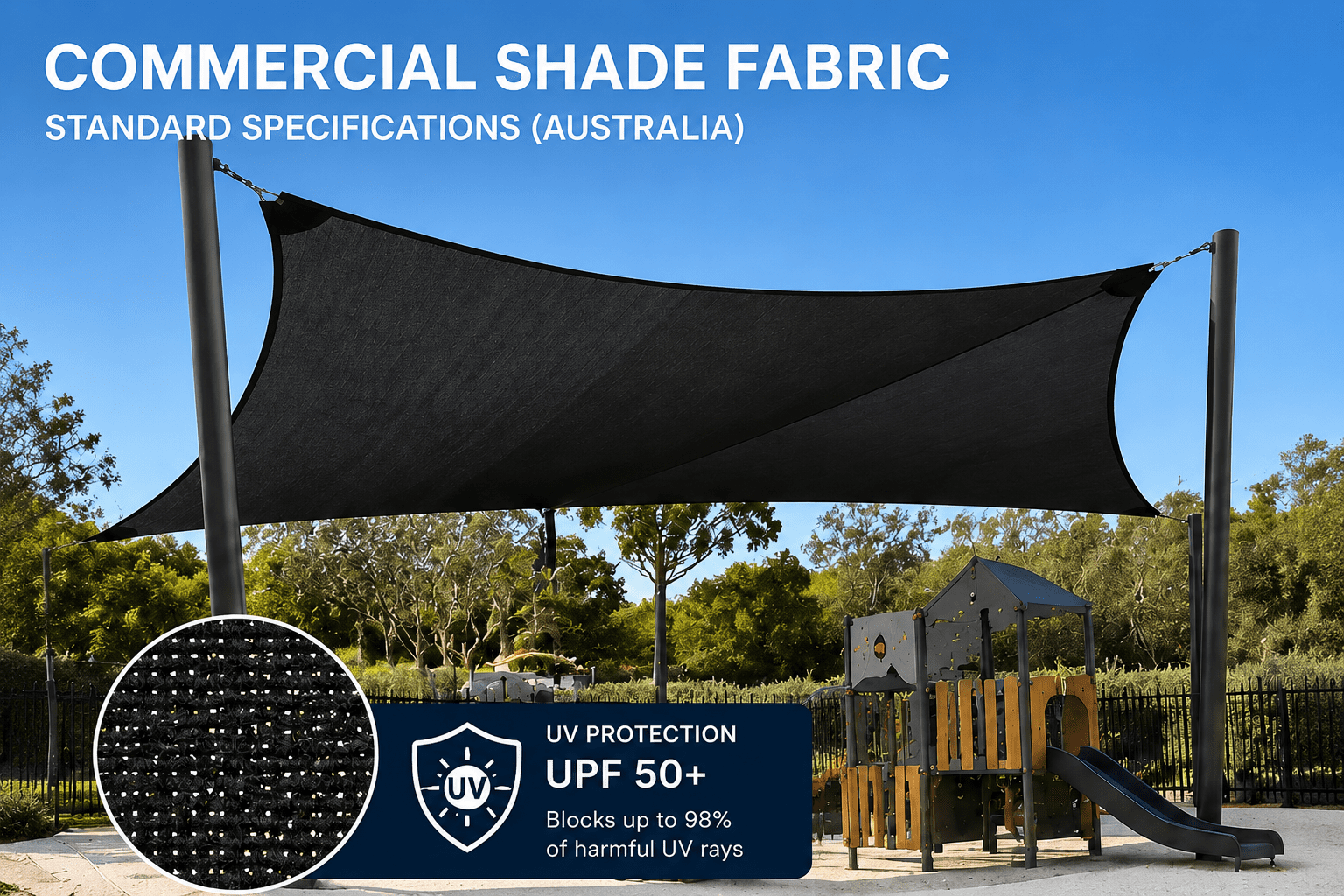
Commercial Shade Fabric
Why Manufacturing Quality Matters
Not all shade sails are built to the same standard, even when the fabric looks similar on a swatch card. Manufacturing process, hardware and design accuracy all affect how a sail performs once it is under real tension and real wind.
DIY Shade Sails Australia, a division of Brisbane Sailmakers Pty Ltd, has been manufacturing commercial quality shade sails from its Brisbane factory since 1994 and has produced more than 25,000 shade sails for customers across Australia. A few aspects of that manufacturing process are worth knowing about as a buyer:
- Brisbane factory production, which keeps design, cutting and sewing under one roof rather than outsourced to multiple suppliers.
- Purpose-built tension membrane CAD software, used to calculate the exact panel shapes and curves needed for a sail to sit drum tight once installed.
- Over 25,000 shade sails produced, giving a long track record across a wide range of Australian climates and backyard layouts.
- 316 stainless steel perimeter cable fitted to every sail, rather than a cheaper webbing or cloth-edge finish.
This kind of commercial quality shade sails approach is the same standard used on larger commercial projects, made available directly to homeowners for DIY installation.
Cable Edge vs Webbing Edge Shade Sails
Direct answer: Cable-edged shade sails, where a stainless steel cable runs through the full perimeter hem, hold tension far better over time than webbing or cloth-edged sails, which rely on the fabric and stitching alone to carry the load.
This is one of the most overlooked differences between a sail that lasts five years and one that lasts fifteen. Most generic shade sail buying guides focus on shape, colour and fabric, but skip over edge construction entirely, even though it has a major impact on real-world performance.
In practice, this means a cable-edged sail is usually the better long-term investment for any pool, deck or entertaining area exposed to Australian wind and storm conditions, even if the upfront cost is slightly higher than a webbing-edge alternative.
Best Shade Sail Colours for Pools and Decks
Colour affects more than the look of your backyard. It also affects heat levels, glare reduction, and the overall comfort of the space throughout the day.
Dark Colours
Darker shades, such as charcoal or navy, tend to cut glare effectively and can offer strong UV performance, but they generally run warmer underfoot and to the touch in direct sun.
Light Colours
Lighter shades reflect more visible light and feel brighter underneath, with a cooler surface temperature. Depending on the specific fabric, lighter colours can sometimes allow slightly more UV through than darker equivalents, so it pays to check the fabric’s UV rating rather than judging by colour alone.
Neutral Colours
Neutral tones, such as sand, stone or soft grey, tend to balance heat and glare reasonably well while suiting most home exteriors, pool tiles and decking. For Queensland conditions, many homeowners land on a mid-tone or neutral colour as the practical middle ground between heat management and everyday liveability.
Shade Sails vs Other Outdoor Shade Solutions
Shade sails are not the only shade structures available for a pool or entertaining area. Umbrellas, pergolas and awnings all have their place, and the right choice depends on the size of the area, budget and how permanent you want the solution to be.
Installation and Safety Considerations
A shade sail is only as good as its installation. Even the best fabric and hardware will underperform if the sail is not properly tensioned or anchored. Keep the following in mind:
- Anchor points need to be strong enough to handle ongoing tension and sudden wind loads, not just the static weight of the sail.
- Proper tensioning is essential. A sail installed drum tight resists flapping and wear far better than one left loose.
- Build in a slight slope or fall across the sail so rainwater runs off rather than pooling in the centre.
- Consider local wind loads, especially in storm-prone areas, and choose fixing hardware rated for those conditions.
- During storm season, check tension and hardware condition regularly, and lower or remove sails if severe weather is forecast and your setup allows it.
Shade sails should always be installed and tensioned according to the manufacturer’s recommendations. Building regulations and approval requirements vary between councils, so it is worth checking with your local authority before installing posts or fixing into structural elements. DIY Shade Sails Australia does not provide engineering or building certification advice, and where structural or planning questions come up, it is best to consult a qualified building professional.
Using Shade Sails for Privacy in Australian Backyards
Most Australian suburbs have homes built close together, which means overlooking windows and clear sightlines into the backyard are common. Shade sails offer a practical, good-looking way to soften this without building a fence or screen.
- Angling a sail toward a neighbouring upper-storey window can block direct sightlines into a pool or deck area.
- Lower-pitched sails over a pool reduce visibility from surrounding properties while swimmers are in the water.
- Layered sail arrangements, with one sail set higher and another lower, can manage both sun angle and privacy at the same time.
This privacy benefit is a major reason shade sails remain popular in established suburbs, where backyard outdoor living space is often shared visually with several neighbouring homes.
Before Ordering Your Shade Sail
Once you have settled on a shape, fabric and colour, a few practical steps will make the ordering process much smoother.
- Measure your area carefully, including the height and position of all proposed fixing points.
- Choose a shape that matches your available anchor points and the area you want covered.
- Select your fabric, breathable HDPE for pools and general shade, or waterproof for all-weather entertaining areas.
- Select a colour that balances heat, glare and how it will look against your home, pool and decking.
- Check your anchor points are structurally sound, or plan for new posts where needed.
- Get an instant quote before committing to a final design.
A measuring guide can help you take accurate site measurements yourself, and an online price calculator makes it easy to get an instant, factory-direct quote based on your shape and edge measurements before you order.
Frequently Asked Questions
Conclusion
Choosing the best shade sail for pool area use, a deck, or an outdoor entertaining space comes down to a handful of practical decisions: how much coverage you need, which shape suits your anchor points, whether breathable or waterproof fabric fits your climate goals, and how the colour will perform under Australian sun.
Whether you are after shade sail ideas for deck spaces, a dedicated shade sail over pool, or a full outdoor entertaining shade sail setup, the same principles apply: choose quality materials such as cable-edged construction, get the tensioning right, and match the design to how your family actually uses the space.
For more backyard shade sail inspiration, browse the shade sail gallery for real customer installations, or take a look at the standard shape shade sails range if you want a straightforward, factory-direct option for your pool, deck or entertaining area.